What Community Health Workers See First: Recognizing Water Damage Before It Harms Your Family

Photo: Fabiovieiramd, CC BY-SA 4.0, via Wikimedia Commons
The Problem Hiding Behind Your Walls
In cities like New Orleans, Baltimore, and Detroit—where aging infrastructure meets humid climates and decades of deferred maintenance—water damage is not merely a property concern. It is a public health emergency unfolding in slow motion. Community health workers who enter homes daily describe a familiar pattern: a faint musty odor, a ceiling stain dismissed as old, a window frame that no longer closes flush. These are not cosmetic imperfections. They are early warnings of a cascade that, left unaddressed, can devastate a family's respiratory health, compromise structural integrity, and generate repair costs that far exceed what proactive intervention would have required.
"By the time a family calls us because someone in the household has developed chronic coughing or asthma flare-ups, the mold is usually already well established," says a community health outreach coordinator working in the Gulf Coast region who asked to be identified only by her first name, Renata. "We've learned to look earlier, before the health outcomes appear."
At Healthy Homes Collaborative, we believe that knowledge is the first line of defense. The following guide draws on interviews with frontline health workers, input from public health officials, and established remediation frameworks to help residents—particularly those in underserved communities with limited access to professional inspections—identify water intrusion before it becomes a crisis.
Why Water Damage Disproportionately Affects Underserved Communities
The connection between housing quality and health equity is well documented. According to the U.S. Department of Housing and Urban Development, low-income renters are significantly more likely to live in units with chronic moisture problems, incomplete waterproofing, and aging plumbing systems. These structural vulnerabilities are compounded by the power imbalance between tenants and landlords, which can discourage residents from reporting damage for fear of retaliation or lease termination.
Public health researchers have linked sustained mold exposure to a range of serious conditions, including allergic rhinitis, asthma exacerbation, hypersensitivity pneumonitis, and—in the most severe cases involving toxic mold species such as Stachybotrys chartarum—neurological symptoms. Children, elderly individuals, and those with compromised immune systems face the greatest risk. In communities where baseline health disparities already exist, water damage functions as an accelerant, deepening outcomes that are already inequitable.
What to Look For: A Community Health Worker's Checklist
Frontline health workers emphasize that early identification does not require professional credentials. Systematic observation, conducted room by room, can reveal significant warning signs. The following checklist reflects the protocols used by outreach teams in high-moisture climates.
Exterior Indicators
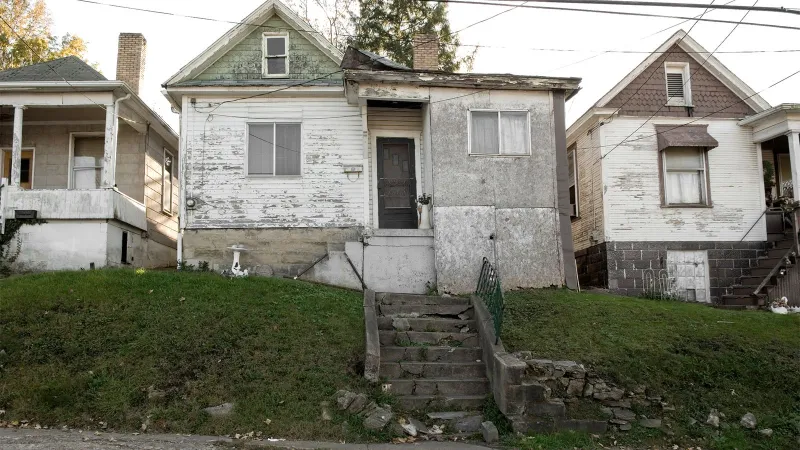
- Gaps or cracks in foundation walls, particularly at grade level
- Damaged or absent gutters and downspouts that direct water toward the foundation
- Ground that slopes toward the home rather than away from it
- Peeling exterior paint or siding, which may indicate moisture trapped beneath the surface
- Efflorescence—white chalky deposits on masonry—signaling water movement through concrete or brick
Interior Warning Signs
- Discoloration or staining on ceilings, walls, or around window frames, even if currently dry
- Warped, buckling, or soft flooring, especially near bathrooms, kitchens, or exterior walls
- Paint or wallpaper that is bubbling, peeling, or separating from the surface
- Persistent musty or earthy odors, particularly in basements, closets, or bathrooms
- Visible mold growth, which may appear as black, green, gray, or white spotting
- Condensation accumulating regularly on windows, pipes, or interior walls
- Rust stains beneath sinks or around pipe connections
Health-Related Signals in the Household
- Respiratory symptoms—coughing, wheezing, nasal congestion—that improve when occupants are away from home
- Skin irritation or persistent headaches without an identified cause
- Worsening asthma in children, particularly during winter months when homes are sealed
"One thing I always tell residents is to trust their nose," says Marcus, a community health worker operating in a mid-Atlantic urban corridor. "If a room smells like a wet basement even when everything looks dry, that odor is biological. Something is growing somewhere."
The Cascade Effect: From Moisture to Structural Crisis
Water intrusion rarely remains static. A slow roof leak that saturates attic insulation will, over months, compromise roof decking, introduce mold into HVAC systems, and eventually affect the ceiling below. A leaking pipe inside a wall cavity creates ideal conditions for mold colonization within 24 to 48 hours of sustained moisture. Understanding this cascade is essential for communicating urgency—both to landlords and to housing code enforcement agencies.
Public health officials note that the cost differential between early intervention and crisis remediation is substantial. Minor waterproofing repairs or targeted mold treatment may cost a few hundred dollars. Full mold remediation following structural penetration can reach tens of thousands, a burden that falls disproportionately on property owners who have deferred maintenance for years—and on tenants who suffer health consequences in the interim.
Practical Remediation Steps for Residents and Advocates
When water damage is identified, residents should act promptly and document thoroughly. The following steps are recommended by community health organizations working in affected areas.
- Photograph and log everything. Date-stamped photographs of staining, mold growth, or structural damage create a documented record essential for housing code complaints and legal action.
- Submit written repair requests. Verbal requests are difficult to enforce. Written notices—sent via certified mail or email—establish a timeline that landlords are legally obligated to address in most states.
- Contact local housing code enforcement. Most municipalities have agencies empowered to inspect and cite landlords for habitability violations. Many offer free inspections upon tenant request.
- Reduce indoor moisture in the interim. While awaiting repairs, residents can use dehumidifiers, increase ventilation, and avoid drying laundry indoors to slow mold proliferation.
- Connect with tenant advocacy organizations. Groups such as local legal aid societies and community development corporations can provide guidance on tenant rights, repair-and-deduct statutes, and rent escrow options available in many states.
"We always remind residents that identifying the problem is only the beginning," Renata explains. "The next step is using every available channel to demand that it gets fixed. That's where community support becomes essential."
Building a Culture of Early Detection
Healthy Homes Collaborative believes that communities—not just individual households—are the appropriate unit of intervention. Neighbor-to-neighbor knowledge sharing, block-level health education workshops, and training programs that certify community members as informal housing health advocates have demonstrated measurable impact in cities including Chicago, Philadelphia, and Houston.
When residents understand what they are looking for, and when they have the tools and language to advocate effectively, the power dynamic between tenants and negligent landlords begins to shift. Water damage, caught early, is manageable. Ignored, it is a crisis. The difference, in most cases, is informed observation—and a community willing to act on what it sees.