Your Neighbor's Crumbling Porch Is a Public Health Issue: The Block-Level Housing Crisis No One Is Talking About
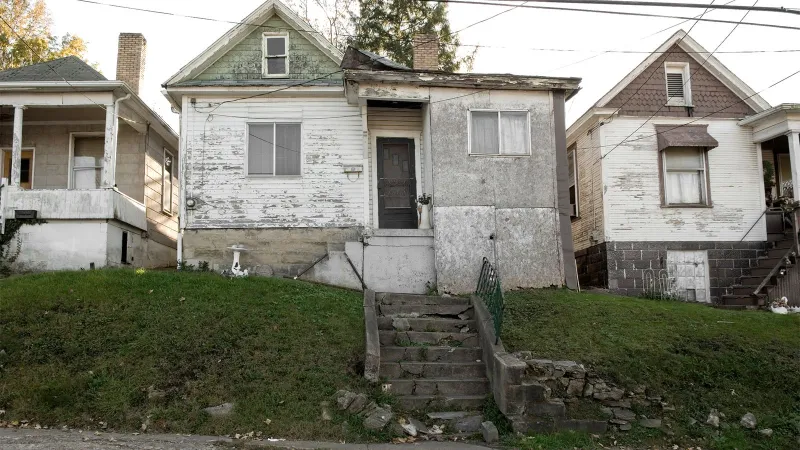
Photo: deteriorating neighborhood housing row homes urban community health disparity, via assets.medpagetoday.net
The House Next Door Is Your Health Problem Too
American culture prizes individual homeownership as both an economic milestone and a private domain. We speak of our homes as castles, sanctuaries, personal investments. This framing is deeply ingrained—and, from a public health perspective, dangerously incomplete. Because the evidence is clear: the condition of the housing surrounding yours shapes your health in ways that no amount of personal vigilance can fully counteract.
This is not a metaphor. It is epidemiology.
When a significant share of homes on a given block harbor persistent mold, deteriorating lead paint, structural instability, or inadequate ventilation, the health consequences do not remain neatly contained within individual property lines. Aeroallergens migrate through shared air. Rodent and pest infestations spread through connected infrastructure. Psychological stress, generated by living amid visible decay and uncertainty, elevates cortisol levels and suppresses immune function in ways that manifest as measurable health disparities across entire zip codes. The neighborhood, as a unit of analysis, matters enormously—and yet housing policy in the United States has historically refused to treat it as such.
The Data Is Not Subtle
Researchers at institutions including the Harvard T.H. Chan School of Public Health and the Urban Institute have spent decades documenting the relationship between neighborhood housing quality and health outcomes. Their findings are consistent and, frankly, damning.
Children residing in neighborhoods with high concentrations of deteriorating housing stock exhibit elevated blood lead levels, higher rates of asthma hospitalization, and measurably lower cognitive performance scores compared to peers in better-maintained communities—even after controlling for household income. Adults in these neighborhoods report higher rates of chronic respiratory disease, cardiovascular conditions, and depression. Life expectancy gaps between neighborhoods separated by only a few miles can reach a decade or more in cities like Chicago, St. Louis, and Memphis.
The mechanisms are multiple and mutually reinforcing. Deteriorating paint in older homes—particularly those built before 1978, when lead-based paint was still federally permitted—releases dust and chips that contaminate shared outdoor spaces, including sidewalks, yards, and playgrounds used by entire communities. Poorly maintained structures attract rodent populations that spread allergens linked to pediatric asthma. Vacant and blighted properties, common in neighborhoods where disinvestment has accelerated deterioration, suppress property values in ways that reduce the tax base available to fund the very public health infrastructure communities need.
This is the neighborhood effect: a feedback loop in which concentrated housing decline amplifies health risk for everyone in proximity, regardless of the condition of their own home.
Structural Inequality Is the Architecture of This Crisis
To understand why certain neighborhoods bear this burden disproportionately, it is necessary to be direct about history. The concentration of deteriorating housing in low-income communities and communities of color in the United States is not accidental. It is the accumulated consequence of deliberate policy choices: redlining practices that denied mortgage access and investment to Black and Brown neighborhoods for decades; urban renewal programs that displaced communities of color while routing highways and industrial facilities through their former homes; exclusionary zoning that confined affordable housing to the least desirable and most environmentally burdened parcels.
These decisions did not merely shape where people lived. They shaped the quality of the structures in which they lived, the maintenance resources available to landlords in those areas, and the political power of residents to demand accountability. Neighborhoods that were systematically starved of investment in the mid-twentieth century are, predictably, the neighborhoods now grappling with the oldest and most deteriorated housing stock—and the most severe housing-related health burdens.
To frame this as a matter of individual responsibility—to suggest that residents simply need to maintain their homes better, or choose to live elsewhere—is to misunderstand, or deliberately obscure, the structural origins of the problem. A family renting in a neighborhood where 40 percent of housing units have unaddressed code violations cannot remediate their way out of a system designed to extract value from their community rather than invest in it.
What Block-Level Decline Costs Everyone
The economic argument for neighborhood-level housing intervention is, in fact, straightforward—and it ought to appeal across ideological lines. Emergency room visits attributable to housing-related illness cost the U.S. healthcare system billions of dollars annually. Lead poisoning, which causes permanent neurological damage in children, generates lifetime costs in special education services, lost productivity, and involvement in the criminal justice system that dwarf the expense of remediation. Asthma hospitalizations, preventable through adequate ventilation and pest control, represent one of the most costly and avoidable drains on Medicaid budgets in affected states.
Investing in neighborhood housing quality is not charity. It is cost-effective public health policy with returns that accrue across healthcare, education, and economic productivity. The question is not whether we can afford intervention. It is whether we can justify continuing to absorb the far greater costs of inaction.
Policy Interventions That Work—and Why They Require Community Pressure
Effective responses to neighborhood-level housing deterioration exist. They are not theoretical. Cities that have implemented proactive rental inspection programs—in which housing officials inspect all rental units on a rotating basis rather than waiting for tenant complaints—have documented meaningful reductions in code violations and associated health outcomes. Jurisdictions that have created community land trusts, removing housing permanently from speculative markets, have preserved affordability and maintenance standards in ways that market mechanisms alone cannot.
Federal programs including the Community Development Block Grant and the HOME Investment Partnerships Program provide resources specifically intended for housing rehabilitation in low-income communities. These programs are chronically underfunded relative to documented need, and their effectiveness depends heavily on how aggressively local governments deploy them.
None of these interventions happen without political will. And political will, particularly in communities that have been systematically marginalized, does not materialize without organized community pressure. Tenant coalitions, neighborhood health councils, and advocacy organizations that connect housing conditions to health data have proven capable of shifting local policy in cities including Minneapolis, Atlanta, and Seattle. The model works. It requires sustained investment in community organizing infrastructure—the unglamorous, essential work of building collective power among people who have been told their concerns do not merit attention.
The Collaborative Imperative
At Healthy Homes Collaborative, our organizational name reflects a conviction: that healthy housing is not achievable household by household. It is a collective project requiring cooperation among residents, public health agencies, tenant advocates, and policymakers who are willing to treat housing as the health infrastructure it genuinely is.
The crumbling porch two doors down is not your neighbor's private misfortune. It is a data point in a pattern that affects your children's lungs, your family's chronic disease risk, and your community's capacity to thrive. Seeing it that way—clearly, without flinching from the structural forces that produced it—is the beginning of an adequate response.
We do not lack solutions. We lack the political commitment to implement them at the scale the crisis demands. Building that commitment, neighborhood by neighborhood, is precisely the work this moment requires.