The Air You Cannot Escape: How Decades of Neglect Have Made Indoor Pollution a Crisis for Low-Income Renters
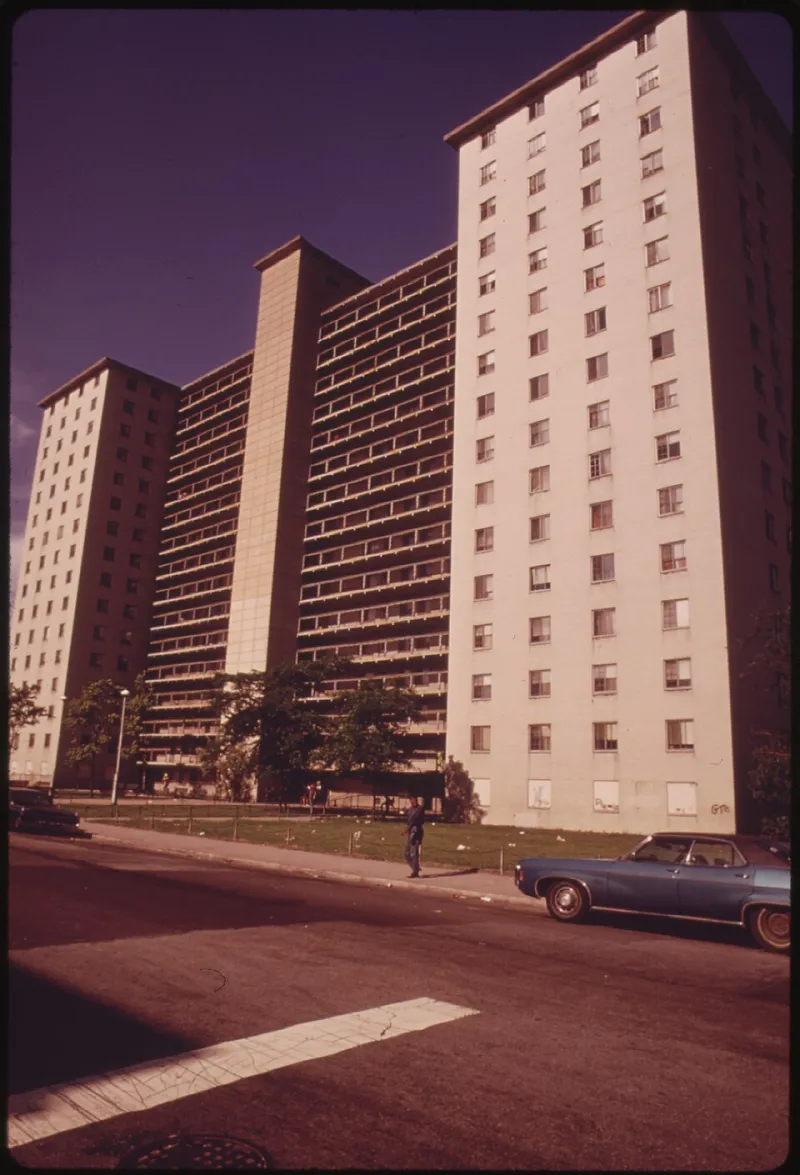
Photo: John H. White, Public domain, via Wikimedia Commons
An Invisible Burden, Unevenly Distributed
Public conversations about air pollution tend to focus on smokestacks, traffic corridors, and wildfire smoke. These are legitimate concerns. But for a significant share of the American population—particularly low-income renters in urban neighborhoods and rural communities with aging housing stock—the most dangerous air they breathe is inside their own homes.
This is not a coincidence. It is the accumulated outcome of decades of disinvestment, regulatory gaps, and a housing market that has consistently placed the least healthy living environments in the hands of those with the fewest resources to escape them. Understanding how indoor air quality becomes a health crisis, and who bears the greatest share of that crisis, is essential to any honest discussion of environmental justice in the United States.
What Makes Older Housing Stock Particularly Dangerous
Housing built before 1980 presents a distinct set of indoor air quality challenges that newer construction largely avoids—not because older buildings are inherently inferior, but because they predate the environmental regulations, material standards, and ventilation requirements that emerged over the latter decades of the twentieth century.
Volatile organic compounds (VOCs) represent one of the most pervasive indoor air hazards in aging rental units. These chemical compounds off-gas from a wide range of building materials and furnishings, including adhesives, older paint formulations, composite wood products, vinyl flooring, and certain insulation materials. Benzene, formaldehyde, and toluene are among the VOCs commonly detected in residential environments. Chronic low-level exposure has been linked to headaches, central nervous system effects, and elevated cancer risk. In poorly ventilated apartments, VOC concentrations can accumulate to levels significantly exceeding outdoor ambient concentrations.
Combustion byproducts are another major concern in older rental housing, where gas stoves without functioning range hoods, unvented space heaters, and aging furnaces are common. Nitrogen dioxide, carbon monoxide, and fine particulate matter (PM2.5) are released during combustion and, in the absence of adequate ventilation, remain suspended in indoor air. The U.S. Environmental Protection Agency has identified indoor combustion as a leading contributor to elevated PM2.5 exposure in residential settings.
Lead dust, while technically a particulate rather than a gaseous pollutant, functions as an airborne hazard in homes where lead-based paint—present in an estimated 24 million American housing units, according to the Department of Housing and Urban Development—has deteriorated or been disturbed during renovation. Lead dust inhalation poses the greatest risk to children under six, for whom even low-level exposure is associated with irreversible neurodevelopmental harm.
Radon, a naturally occurring radioactive gas that enters buildings through foundation cracks and soil contact, is the second leading cause of lung cancer in the United States. It is odorless, colorless, and entirely undetectable without testing. Basement apartments and ground-floor units in high-radon geographic zones carry elevated risk, and testing rates in low-income communities remain disproportionately low.
The Health Consequences Are Not Evenly Shared
The data on indoor air quality and health outcomes in underserved communities is sobering. Asthma rates in low-income urban neighborhoods consistently exceed national averages, and research published in journals including Environmental Health Perspectives and the American Journal of Public Health has repeatedly identified indoor allergens, VOCs, and particulate matter as contributing factors. Children in these communities are not simply unlucky; they are living in environments that systematically undermine respiratory health.
Developmental delays associated with lead exposure remain disproportionately concentrated in communities of color and low-income communities, a pattern that reflects not only the geographic distribution of older housing but also the historical underfunding of lead abatement programs in those same neighborhoods. The long-term economic and social consequences of early childhood lead exposure—including reduced educational attainment and increased likelihood of behavioral challenges—compound existing inequities across generations.
For adults, chronic exposure to elevated indoor pollutant levels is associated with increased rates of chronic obstructive pulmonary disease, cardiovascular disease, and certain malignancies. The compounding effect of living in a neighborhood with poor outdoor air quality—often the case in low-income areas located near industrial corridors or high-traffic roadways—means that residents face degraded air quality both inside and outside their homes, with little relief in either environment.
Accessible Tools for Monitoring What You Breathe
Professional air quality assessments can be expensive and logistically complex. But a growing ecosystem of consumer-grade monitoring technology has made it possible for renters to gather meaningful data about their indoor environment at relatively low cost.
Particulate matter monitors such as the PurpleAir Flex or the Temtop series provide real-time readings of PM2.5 and PM10 concentrations. Prices for entry-level devices begin around $50. Placing a monitor in the kitchen during cooking or near a known ventilation problem can produce compelling documentation of elevated exposure.
Carbon monoxide detectors with digital readouts go beyond the standard alarm threshold and display continuous CO concentration levels, allowing tenants to identify low-level buildup from gas appliances before it reaches dangerous concentrations. These are widely available at hardware stores for under $40.
Radon test kits are inexpensive (typically $15–$30 for a short-term charcoal canister test) and available at home improvement retailers. The EPA recommends testing for any home with a basement or slab foundation, particularly in high-risk states including Iowa, Colorado, Pennsylvania, and Minnesota. Long-term test kits, which are deployed for 90 days or more, provide more reliable average readings.
VOC monitors represent a newer category of consumer device. Products such as the Airthings Wave Mini detect total VOC levels and provide trend data over time. While they do not identify specific chemical compounds, elevated total VOC readings can support a case for improved ventilation or material replacement.
Demanding Change at the Municipal Level
Individual monitoring is valuable. Systemic change requires collective advocacy. Renters and community health advocates have several concrete mechanisms for pushing building code improvements and stronger enforcement at the local level.
Engage your city's housing and building inspection department. Many municipalities have complaint-based inspection processes that are underutilized in low-income communities due to language barriers, fear of retaliation, or simple lack of awareness. Filing a formal complaint—particularly when supported by documented air quality data—creates an official record and triggers an inspection obligation.
Attend city council and planning commission meetings. Local legislative bodies set the enforcement priorities and budgets for housing inspection programs. Consistent public comment from organized tenant groups demonstrating the health consequences of inadequate enforcement creates political pressure for stronger action.
Connect with environmental justice coalitions. Organizations such as WE ACT for Environmental Justice, the National Housing Law Project, and local chapters of the Sierra Club's Environmental Justice program have established frameworks for community-level advocacy on indoor air quality and housing standards. These coalitions can amplify individual tenant concerns into broader policy campaigns.
Push for ventilation standards in rental housing codes. Many municipal housing codes do not currently specify minimum mechanical ventilation requirements for kitchens and bathrooms, or fail to enforce those that exist. Advocating for the adoption of ASHRAE Standard 62.2—the widely recognized benchmark for residential ventilation—as a mandatory component of rental housing inspection is a specific, achievable policy goal.
The Structural Argument
Indoor air quality in low-income housing is not primarily a matter of individual behavior or tenant negligence. It is the product of structural decisions: which neighborhoods receive code enforcement resources, which building materials are permitted in affordable housing construction, which communities are situated adjacent to industrial pollution sources, and which tenants have the legal standing and financial security to demand remediation without fear.
Addressing this crisis requires acknowledging those structural roots. It requires investment in housing inspection infrastructure, expansion of lead abatement and ventilation improvement programs, and a genuine commitment to enforcing habitability standards with the same rigor in low-income neighborhoods as in affluent ones.
At Healthy Homes Collaborative, we hold that clean indoor air is not a luxury. It is a baseline condition for human health and dignity—one that every renter, regardless of income or zip code, has the right to expect in their home.