The Patch-and-Pray Economy: How Landlords' Temporary Fixes Are Costing Tenants—and Communities—Far More Than Real Repairs Ever Would
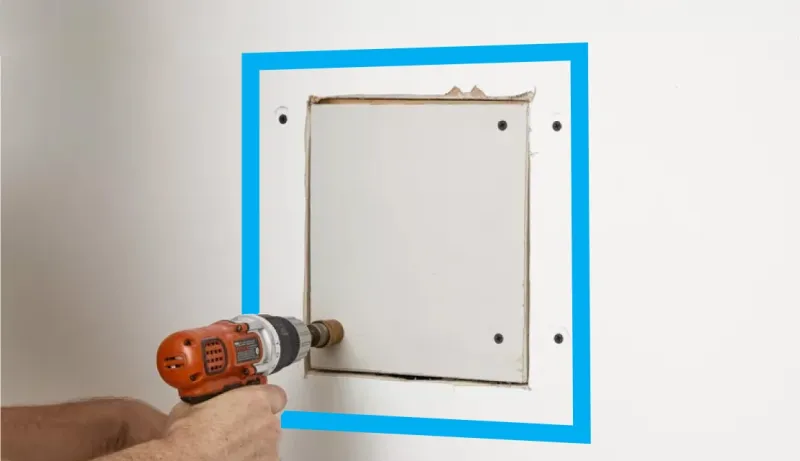
Photo: landlord applying temporary patch to water damaged apartment wall, via www.selecthomewarranty.com
In the spring of 2022, a maintenance crew spent forty-five minutes in Yolanda Ferreira's apartment in a rental complex in Memphis, Tennessee. They painted over a brown ceiling stain in her daughter's bedroom, applied a bead of caulk along the baseboard where the wall met the floor, and left. By October, the stain had returned, darker and wider. By December, her daughter had been diagnosed with a persistent respiratory infection. By the following February, Yolanda had accumulated more than $3,400 in emergency room bills, lost eleven days of work, and was beginning to understand that the leak had never actually been repaired—only concealed.
Yolanda's experience is not exceptional. It is, according to housing researchers, tenant advocates, and public health professionals across the United States, distressingly routine. The strategy she encountered has a name in policy circles: reactive, cosmetic maintenance. In plain language, it is the practice of making a problem look resolved without addressing its underlying cause. And while it may preserve a landlord's cash flow in the short term, the long-term costs—borne almost entirely by tenants, their families, and the broader community—are staggering.
The Economics of Avoidance
To understand why temporary fixes are so prevalent in low-income rental markets, it helps to understand the financial logic that produces them. Many landlords operating in these markets are working with thin margins, aging housing stock, and limited access to capital. In that context, the choice between a $150 cosmetic patch and a $4,000 structural repair is not, from a purely short-term perspective, a difficult one—particularly when code enforcement is inconsistent, tenant turnover is high, and the legal consequences of non-compliance are modest.
What that calculus omits, however, is the compounding nature of deferred maintenance. A $400 roof repair left undone becomes a $4,000 decking replacement, which becomes a $15,000 structural remediation. A $200 plumbing fix left unaddressed becomes a $600 mold remediation, which, if ignored further, becomes a $6,000 gut-and-rebuild. The National Association of Home Builders has documented this trajectory repeatedly: deferred maintenance does not simply pause at the point of deferral. It accelerates.
For tenants, the compounding works differently but no less devastatingly. Each temporary fix that fails restarts a cycle: exposure to the hazard continues, health consequences accumulate, the family incurs costs, and the underlying problem worsens until it eventually becomes impossible to ignore—or until the tenant leaves, making way for the next occupant to begin the cycle again.
What "Fixed" Often Actually Means
Housing inspectors and tenant advocates describe a familiar taxonomy of temporary interventions that masquerade as genuine repairs.
Moisture and mold are among the most frequently mishandled. Painting over water stains with mold-resistant primer is perhaps the most common example: it addresses the visible indicator without touching the moisture source. The mold colony behind the drywall continues to grow. Spore counts in the affected room remain elevated. The family continues to breathe compromised air. When the stain reappears—and it will—the clock resets.
Pest infestations are similarly susceptible to surface-level treatment. A single extermination visit may reduce visible cockroach activity for several weeks, but without sealing entry points, eliminating harborage sites, and addressing the moisture and food sources that sustain infestations, the population rebounds reliably. In multi-unit buildings, a treatment limited to one apartment while adjacent units remain untreated is functionally useless—pests simply redistribute and return.
Heating system failures in colder climates produce some of the most dangerous temporary fixes. Space heaters distributed to tenants when a central heating system fails may prevent hypothermia, but they introduce fire risk, carbon monoxide exposure, and dramatically elevated electricity costs for residents. In some documented cases, tenants in federally assisted housing have reported receiving space heaters as a substitute for boiler repairs that were ultimately deferred for months.
Ventilation deficiencies are addressed cosmetically when landlords install bathroom exhaust fans that vent into wall cavities rather than to the exterior, or replace a broken range hood with a recirculating model that filters grease but does nothing to remove combustion gases. Both interventions create the appearance of compliance while leaving the underlying air quality problem intact.
The Hidden Invoice Tenants Absorb
The costs that temporary fixes externalize onto tenants are rarely tallied in any single ledger, which is part of what makes them politically tractable for landlords. But when researchers and advocates attempt to aggregate those costs, the figures are sobering.
A 2020 analysis by the Pew Charitable Trusts examining housing-related health expenditures in low-income communities estimated that families living in substandard rental housing spend, on average, between $1,000 and $2,500 more annually on healthcare than comparable families in adequate housing—costs attributable directly to conditions including mold exposure, pest allergens, and inadequate heating. Those figures do not include indirect costs: lost wages from caregiving during a child's illness, reduced workplace productivity from chronic conditions, or the long-term economic consequences of developmental delays associated with repeated respiratory illness in early childhood.
Property values in neighborhoods where housing stock is allowed to deteriorate through chronic deferred maintenance also decline, eroding the tax base that funds the schools, parks, and services those same communities depend on. The externalities of the patch-and-pray economy, in other words, do not remain contained within individual apartment walls. They diffuse outward into the neighborhood, the municipality, and ultimately the public health system.
The Preventive Investment Argument
The counterargument to cosmetic maintenance is not idealistic—it is actuarial. Preventive housing investment, defined as systematic, root-cause repair rather than symptom management, consistently demonstrates positive returns when evaluated over a five-to-ten-year horizon.
The Enterprise Community Partners organization, which finances affordable housing development and preservation, has produced models showing that comprehensive energy and health retrofits in low-income rental housing—addressing insulation, ventilation, moisture control, and pest management simultaneously—reduce per-unit operating costs over time through lower maintenance call frequency, reduced tenant turnover, and improved building longevity. The upfront investment is real. So is the return.
For municipalities, the math is perhaps even more compelling. Emergency department visits attributable to housing-related asthma alone cost the US healthcare system an estimated $3 billion annually, according to the Asthma and Allergy Foundation of America. A meaningful fraction of those visits are preventable through housing remediation. Several states—including Maryland, Connecticut, and Washington—have begun funding healthy homes programs precisely because the preventive cost is demonstrably lower than the reactive one.
Accountability as Infrastructure
Changing the incentive structure requires more than goodwill from property owners. It requires enforcement mechanisms with genuine teeth. Proactive rental inspection programs, healthy homes ordinances that tie rental licensing to habitability standards, and expanded tenant legal aid funding are among the policy tools that housing advocates consistently identify as most effective.
Equally important is the expansion of financing options for landlords who lack capital for genuine repairs. Community development financial institutions and state housing finance agencies in several regions have developed low-interest loan products specifically designed for small landlords in low-income markets—products that make the economics of real repair more viable without simply subsidizing negligence.
For Yolanda Ferreira, the policy conversation feels distant. She is currently working with a local tenant rights organization to document her apartment's condition and file a formal complaint with the city's housing authority. She is also looking for a new place to live. "I don't want to fight," she said. "I just want my daughter to be healthy. I want to live somewhere where when something breaks, they actually fix it." That is not an unreasonable expectation. It is, in fact, the minimum standard a just housing system should guarantee—and the minimum investment a genuinely healthy community requires.